Bitcoin Bull Run Timeline
Bitcoin Bull Run Timeline
Understanding Bitcoin’s historical bull runs requires examining key periods of significant price appreciation, often fueled by specific catalysts and market sentiment. These cycles, while unpredictable in their exact timing, offer insights into potential future trends.
The Early Days: 2010-2011
Bitcoin’s first notable bull run occurred between 2010 and 2011. From a fraction of a cent, it surged to over $30. This initial surge was driven by early adopters, cypherpunks, and a growing awareness of Bitcoin’s potential as a decentralized currency. News articles and forum discussions spread the word, attracting individuals interested in the technology and its philosophical implications.
The 2013 Boom and Bust
2013 saw two distinct bull runs. The first, in spring, propelled Bitcoin to over $260. This was largely attributed to increased media coverage and growing interest from individuals seeking alternatives to traditional financial systems. However, this boom was followed by a significant correction. Later in the year, a second, even more substantial run pushed Bitcoin above $1,000 for the first time. This rally was fueled by factors including the Cyprus banking crisis, which highlighted the risks of centralized financial institutions, and growing interest from Chinese investors.
The 2017 Crypto Mania
2017 marked a watershed moment for Bitcoin and the broader cryptocurrency market. Bitcoin’s price skyrocketed from under $1,000 at the beginning of the year to nearly $20,000 in December. This bull run was driven by a confluence of factors, including increased institutional interest, the proliferation of ICOs (Initial Coin Offerings), and widespread media hype. The promise of blockchain technology and its potential applications beyond cryptocurrency also contributed to the frenzy.
The 2020-2021 Surge
Following a period of consolidation, Bitcoin entered another significant bull run in late 2020, reaching a new all-time high above $69,000 in November 2021. This surge was characterized by institutional adoption from companies like MicroStrategy and Tesla, who added Bitcoin to their balance sheets. Payment giants like PayPal and Square integrated Bitcoin into their platforms, further legitimizing the asset. The COVID-19 pandemic and subsequent government stimulus measures also played a role, as investors sought alternative investments amidst economic uncertainty.
Looking Ahead
While predicting the future of Bitcoin is impossible, understanding past bull runs can provide context and insights. Factors such as regulatory developments, technological advancements, macroeconomic conditions, and overall market sentiment will likely influence future price movements. It’s crucial to remember that Bitcoin is a volatile asset, and any investment decisions should be made with careful consideration and a thorough understanding of the risks involved.
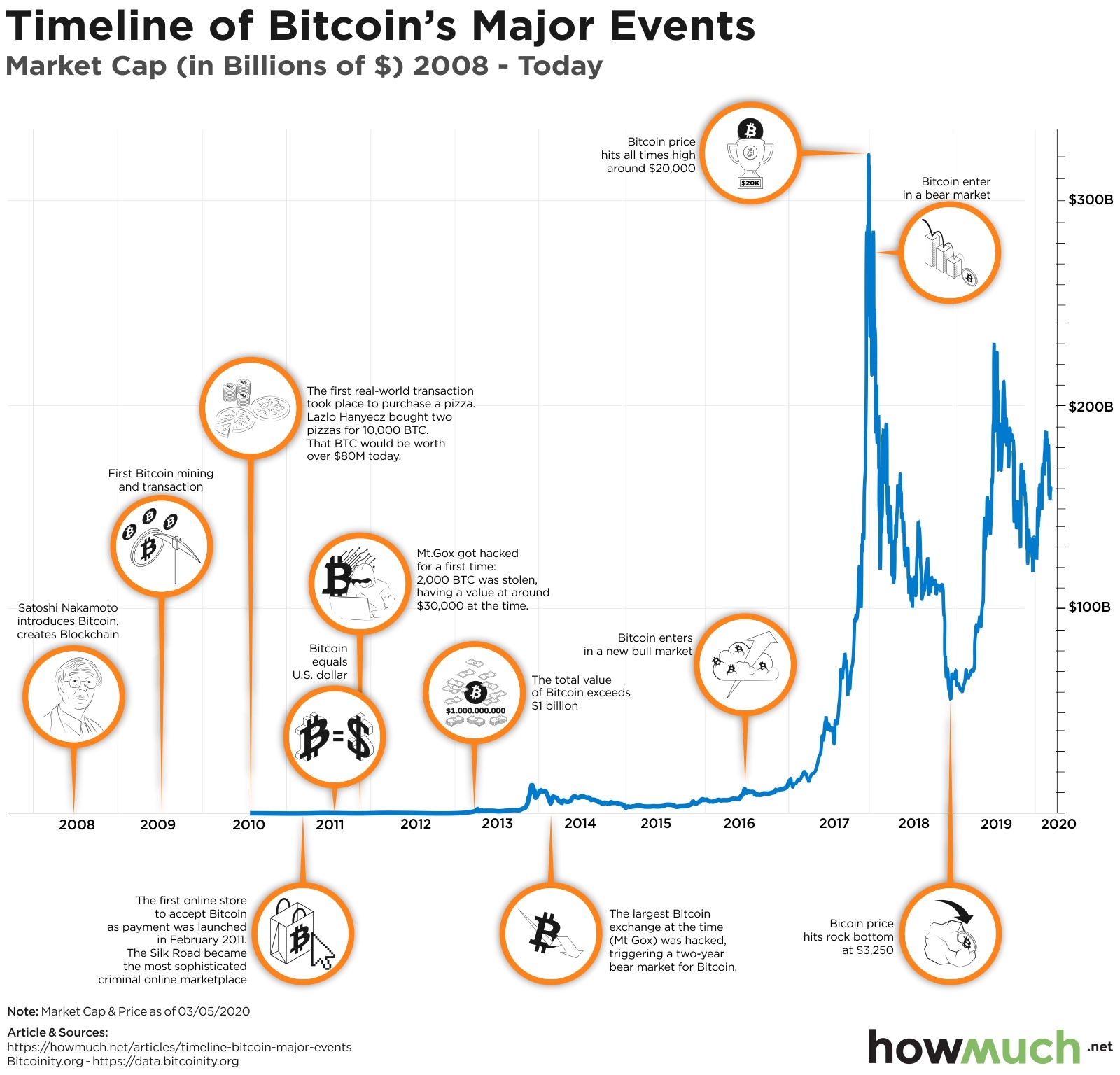 1600×1536 visualizing bitcoins wild ride decade from howmuch.net
  2868×1654 bitcoin bull run bear market weekly chart june bitstamp from www.tradingview.com